Infantile spasms is a diagnosis that can change the course of a family’s life in an instant, even when the earliest signs are small and easy to miss. What begins as a quick movement after waking, a strange pattern that lingers in the back of a parent’s mind, can quickly turn into a rush of tests, new language, and decisions no one expected to face.
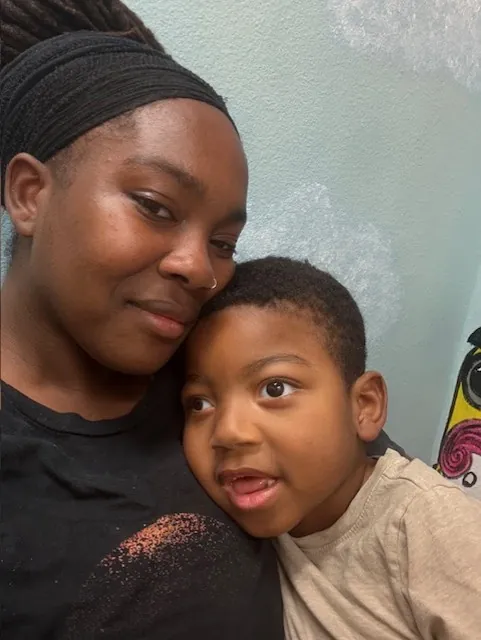
For Aminah Ryzoncity and her son Moon, our CNF 2025 Harnett Grant recipient, that turning point began quietly and changed the course of their lives in ways they are still navigating today.
When the subtle movements started
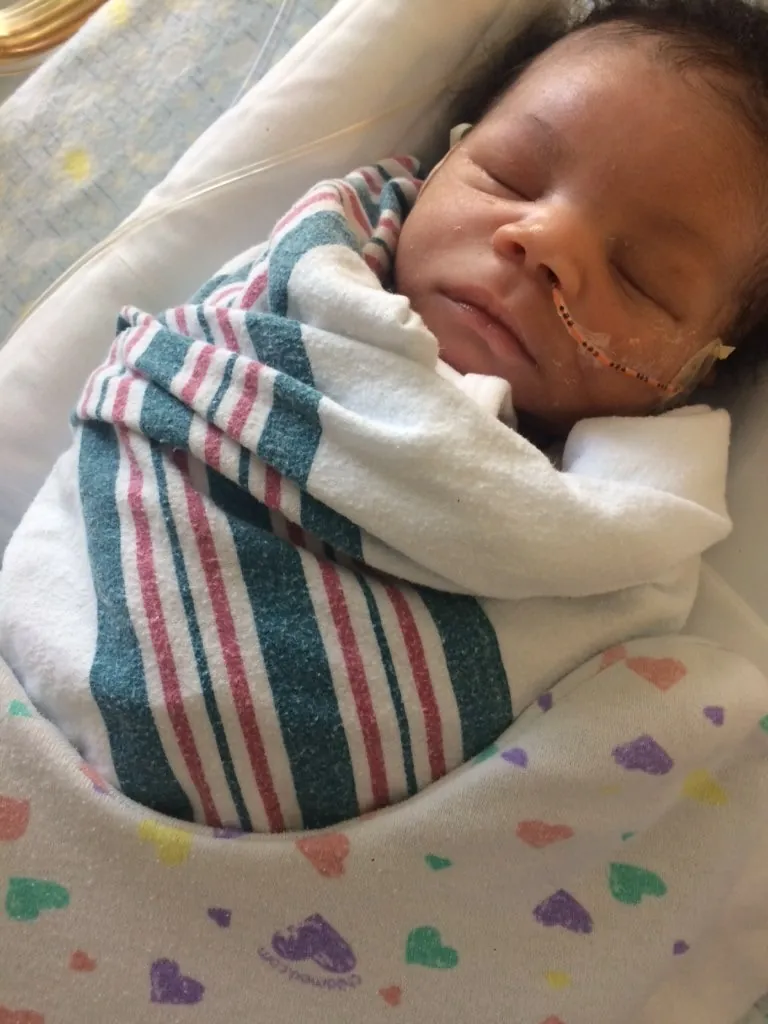
Moon’s story begins earlier, with an injury at birth called hypoxic ischemic encephalopathy, or HIE. At the time, his family did not yet know how that injury might shape his future. They only knew he had survived, and they were focused on loving him through each day.
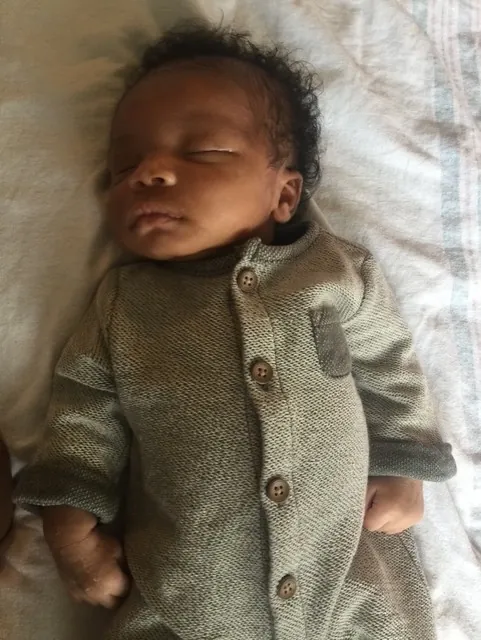
A few months later, when Moon was about four months old and Aminah’s husband had just returned to Jamaica for a week, small signs began to surface. “The day after my husband left, I noticed Moon doing newborn light reflexes every time he woke up for just a couple of seconds. I remember thinking this was odd since he was four months old and obviously not a newborn anymore.”
Trusting her instincts, Aminah did what many parents in this community do: she documented what she was seeing and reached out for help. “I sent the video to my sister and his pediatrician, who both didn’t think much of it. This went on for maybe five days until my husband came home and told me that we should call his neurologist. I called and let them know what Moon was doing, and they told us to immediately get to the hospital.”
That word immediately changed everything. “This made me very scared and so I Googled his symptoms and immediately saw a video of a child having spasms, I immediately felt grief, and I just cried because everything that I was reading online is just so dark and gruesome, and the outcomes were not favorable.” By the time the EEG was done, Aminah already knew what it would show. “It was infantile spasms. They got us on the medication ATCH (Adrenocorticotropic hormone) and taught us how to do the injections and sent us home. Luckily for us, the medication was able to stop the spasms. Others aren’t so lucky.”
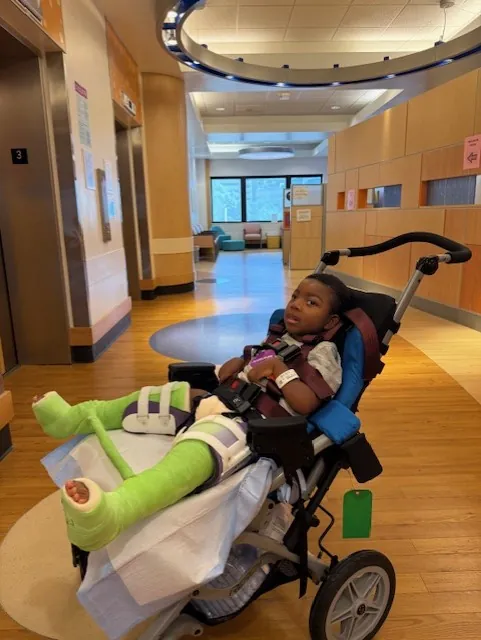
But even when the spasms stop, the story does not reset. For Moon, the impact on his development was immediate and lasting. “Unfortunately, infantile spasms stopped Moon’s development which was really hard for us to come to terms with. He was later diagnosed with cerebral palsy, critical vision impairment, LGS, and a host of other health issues.”
For families like Moon’s, infantile spasms is not a single event. It is a long journey filled with new diagnoses, new acronyms, and new realities that unfold over time.
Mourning the future you imagined
Some of the hardest parts of this journey are not seen on EEGs or captured in medical notes. They live in the quiet moments when parents are trying to hold two truths at once. They love their child exactly as they are, and at the same time, they are grieving the life they thought their child would have.
For Aminah and her family, that tension showed up quickly after Moon’s diagnosis. “Some of the challenges we faced as parents were navigating the medical world and coming to terms with the realities of infantile spasms, like his development. His development basically ended after he was diagnosed.”
For Aminah, one of the deepest challenges has been learning to live with the gap between what she once imagined for Moon and what his life actually looks like now. “And one of the biggest challenges that we faced was basically mourning the future that our son should have had versus the one that he obviously had been dealt…I often worry about his future and the many challenges that he may face.”
There is a particular kind of courage in naming this grief out loud. It does not change the medical facts, but it does something just as important: it makes room for other families to see themselves in her words and experience, and to know that feeling both deep love and deep sorrow for what might have been, is very human, and very understandable.
What the Harnett Grant makes possible for Moon’s family
Families facing infantile spasms are often carrying more than most people ever see. There are medical appointments to keep up with, therapies to coordinate, financial strain to manage, and homes that are rarely designed for medically complex children.
For Moon’s family, the Harnett Grant is helping them address something very concrete and very urgent: where and how they live. “Receiving this grant will help us a lot. Right now we are a active-duty family and we live in military housing. We plan on using part of this grant to help us find a more suitable home for us.”
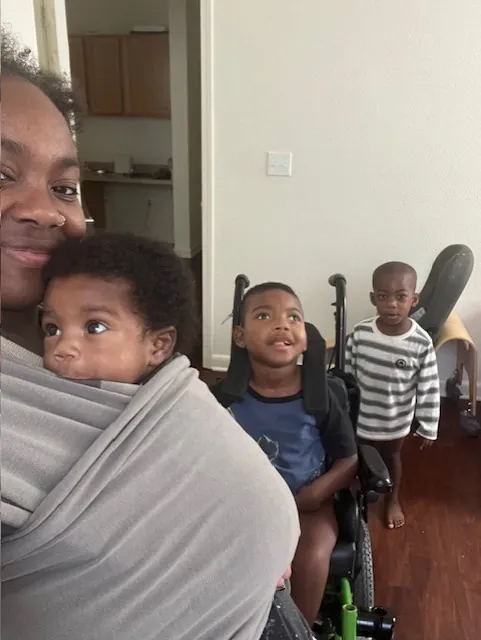
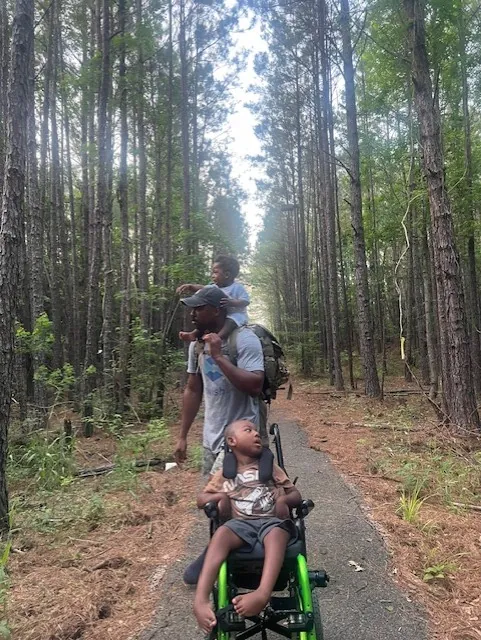
Their current space simply does not match what Moon needs, with the layout of their home, turning everyday care into workarounds. “It’s not very wheelchair friendly. Although there’s no upstairs or anything, it’s really hard to get moved through the doorways. The hallways are very narrow, so we have a hard time with his medical equipment, and we just need a more ADA compliant house basically.” With the help of this grant, they can look for a house that fits their reality, with space for Moon’s wheelchair, his medical equipment, and their large, loving family to move and care for him more safely and comfortably.
The ways Moon speaks without words
Communication in Moon’s world does not always look like spoken words or clear sentences, but his parents know his language well. “So Moon is not able to communicate with us in any conventional way. He does have a communication device, and we’re currently trying to figure out how best to use it where Moon can communicate with us, but he does have other ways that he communicates with us.”
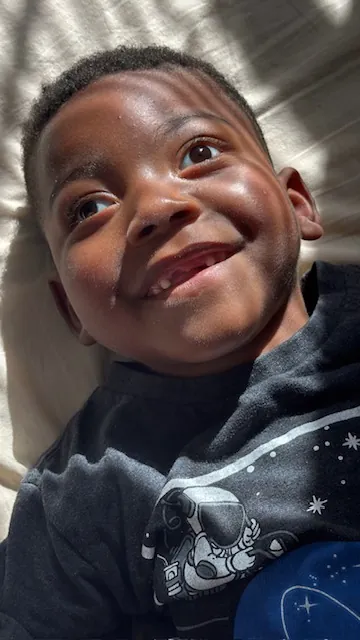
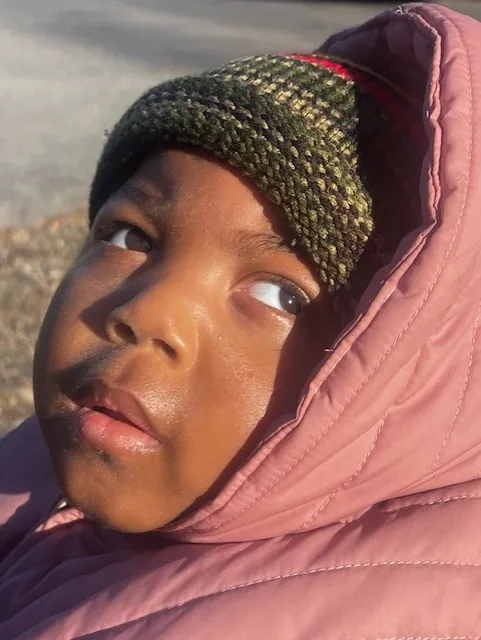
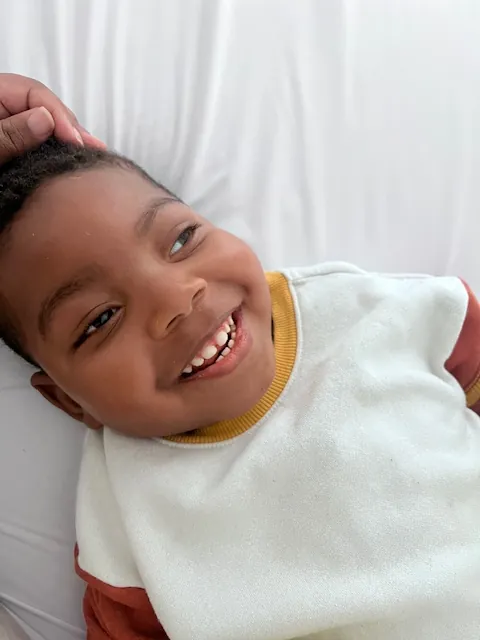
One of those ways shows up every morning. “Like, in the morning when we turn on the light. Our shadow covers his face, he cracks the biggest smile. Subtle as it may be, he finds a way to let us always know that he’s okay, and when he’s not in a great mood, he lets us know in his own way.”
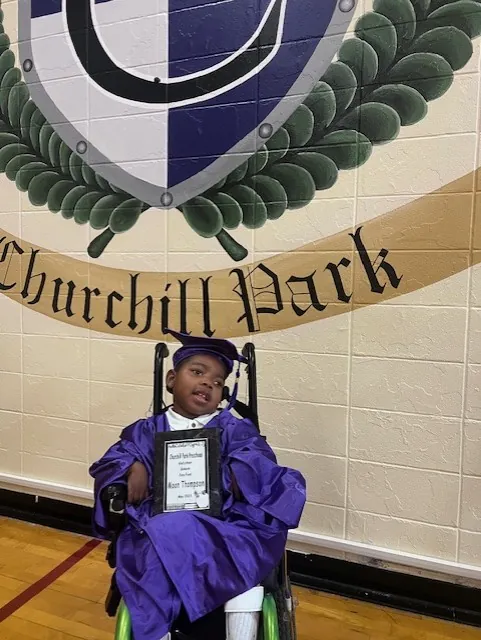
His parents see how much strength it takes for him to keep showing up to each day. “What we want most for him is to know that he’s the most resilient boy ever to smile at us and love us. Despite everything, and everything he’s dealing with, he shows how strong he is, despite all the surgeries and the pain he goes through daily and despite the many sleepless nights, he’s able to get through it. We want him to know that his many siblings and his parents love him unconditionally and that he’s the biggest light in our life.” That smile is its own language, a quiet “I’m here and I know you are too.” For Moon’s family, this is their center: a boy who meets them with a smile, siblings who orbit around him, and parents who keep finding new ways to tell him, in words and actions, that he is their light.
A message to other families facing infantile spasms
Before ending her interview, Aminah wanted to speak directly to other families walking a similar path. “For families navigating this world right now, my message to you is find support. Lean on your partner and your community. And most importantly, make time for yourself. I know that’s easier said than done, but life as a caretaker takes a toll on you both emotionally and physically.
Take a breath. Having a strong mind and body is the best help you could ever give your child.” No one can remove the weight of complex care. But community can change the way that weight is carried.
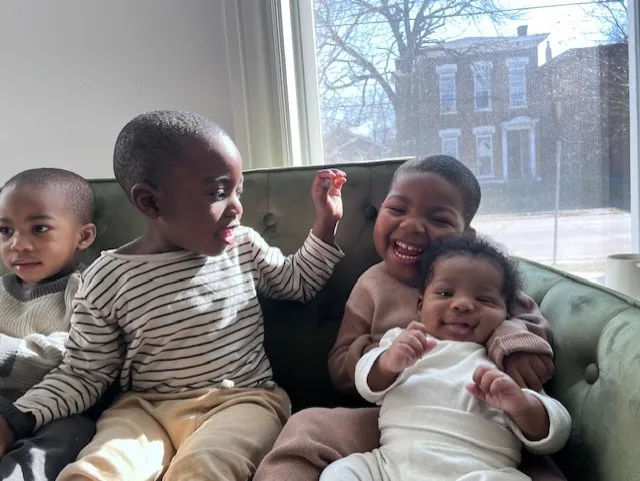
At the Child Neurology Foundation, the Harnett Grant is one way we help families who are facing infantile spasms and their long-term impact. Families like Moon’s remind us why this work matters.
Moon’s smile when the morning light turns on is not a small detail. It is a picture of what many families in this community are fighting for every day. Not a perfect life, but moments of comfort, connection, and real support in a world that often feels too narrow for their needs.
If you would like to support families like Moon’s:
- Share this story with someone who needs to feel understood.
- Learn more about infantile spasms and how to recognize early signs.
- Support Child Neurology Foundation’s work so that grants like the Harnett Grant can continue to help families create safer, more accessible, and more stable lives for their children.
To every family living with infantile spasms today, we see your effort. We see your questions. We see the way you keep turning on the light each morning, even when you are not sure what the day will hold. And like Moon, your child’s presence is a light in this community.